
Uterine fibroids are common, non-cancerous growths that develop in or around the uterus. Although some fibroids cause no symptoms, others can lead to heavy menstrual bleeding, pelvic pressure, abdominal discomfort, frequent urination, or fertility-related concerns. For women looking for Fibroid Treatment Without Surgery in Bengaluru, uterine fibroid embolization (UFE) is an established minimally invasive treatment option that may be appropriate in selected cases.
Uterine Fibroid Treatment should always be planned after evaluating the number, size, location, symptoms, age, medical history, and reproductive goals of the patient. UFE is performed by an interventional radiologist and uses image guidance to reduce blood flow to the fibroids, causing them to shrink over time.
Fibroid Treatment Without Surgery in Bengaluru: Understanding UFE can help patients understand how this procedure works, who may benefit from it, what recovery involves, and how it compares with other treatment approaches.
Dr. Dheeraj Tiwari is an Interventional Radiologist in Bangalore who provides minimally invasive image-guided treatments for a range of vascular and non-vascular conditions, including uterine fibroid embolization.
Understanding Uterine Fibroids: Symptoms, Causes and Diagnosis
Uterine fibroids, also called leiomyomas or myomas, are benign growths arising from the muscular tissue of the uterus. They can occur as a single fibroid or multiple growths and may vary considerably in size.
For patients exploring Fibroid Treatment Without Surgery in Bengaluru: Understanding UFE, identifying the type and location of fibroids is an important first step.
Symptoms of Uterine Fibroids
Some women have no symptoms and discover fibroids during a routine examination or imaging study. When symptoms occur, they may include:
- Heavy or prolonged menstrual bleeding
- Pelvic pain or pressure
- Abdominal fullness or enlargement
- Painful periods
- Lower back discomfort
- Frequent urination
- Constipation or pressure on the bowel
- Pain during sexual intercourse
- Tiredness related to iron-deficiency anaemia caused by heavy bleeding
Symptoms can differ according to the fibroid’s size and location. A small fibroid can sometimes cause significant symptoms, while a larger fibroid may remain relatively asymptomatic.
Causes and Risk Factors
The exact cause of fibroids is not completely understood. Their development appears to involve genetic, hormonal, and other biological factors.
Factors associated with fibroid development can include:
- Reproductive age
- Family history of fibroids
- Hormonal influences
- Certain genetic changes within fibroid tissue
- Other individual risk factors
Having fibroids does not mean that cancer is present. Most uterine fibroids are benign.
Diagnosis of Uterine Fibroids
Diagnosis generally begins with a medical history and pelvic examination, followed by appropriate imaging.
Ultrasound is commonly used to identify fibroids and assess their size and location. In selected cases, MRI may provide more detailed information, particularly when treatment planning requires precise mapping of multiple or complex fibroids.
Blood tests may also be recommended when heavy menstrual bleeding raises concern about anaemia.
A detailed diagnosis allows the treating specialist to determine whether Uterine Fibroid Treatment is necessary and which treatment options may be appropriate.
Uterine Fibroid Embolization: Procedure, Benefits and Recovery
For women considering Fibroid Treatment Without Surgery in Bengaluru: Understanding UFE, uterine fibroid embolization is an important minimally invasive option to discuss with a qualified specialist.
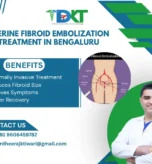
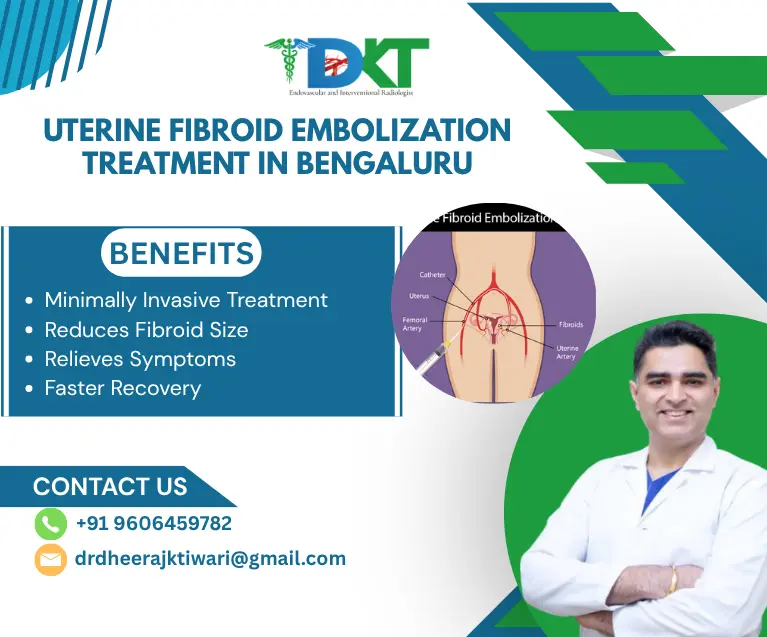
UFE is performed by an interventional radiologist using real-time imaging. Instead of surgically removing the uterus or fibroids, the procedure reduces the blood supply feeding the fibroids.
How UFE Works
The procedure generally involves the following steps:
- The patient is prepared and given appropriate medication for comfort.
- A small catheter is introduced through a blood vessel, commonly through the wrist or groin.
- Using imaging guidance, the catheter is carefully directed toward the uterine arteries.
- Tiny embolic particles are delivered through the catheter.
- These particles reduce blood flow to the fibroid tissue.
- The fibroids gradually shrink as their blood supply decreases.
The exact technique and access route depend on the patient’s anatomy, clinical condition, and the interventional radiologist’s assessment.
UFE does not involve making a large abdominal incision. However, it is still a medical procedure with potential risks, and individual suitability must be assessed before treatment.
Benefits of UFE
Potential advantages of UFE in appropriately selected patients include:
- Minimally invasive approach
- No large abdominal incision
- Treatment of multiple fibroids during one procedure
- Preservation of the uterus
- Reduction in heavy menstrual bleeding for many patients
- Gradual reduction in fibroid size
- Generally shorter recovery than major open surgery
UFE may be particularly useful for patients who have symptomatic fibroids and are looking for a uterus-preserving treatment option.
However, preservation of the uterus does not automatically mean preservation of fertility. Women who wish to become pregnant should discuss their reproductive plans with their gynaecologist and interventional radiologist before choosing treatment.
Recovery After UFE
Recovery varies between patients. Some women experience cramping or pelvic discomfort following embolization. Other temporary symptoms can include nausea, tiredness, low-grade fever, or mild vaginal discharge.
Pain-management medication may be prescribed according to individual needs.
Patients should follow their doctor’s instructions regarding activity, medication, hydration, and follow-up appointments. Symptoms caused by fibroids generally improve progressively as the fibroids shrink.
The time required to return to normal activities varies, but many patients resume routine activities sooner than after major abdominal surgery.
UFE Compared With Other Fibroid Treatments
When considering Fibroid Treatment Without Surgery in Bengaluru: Understanding UFE, it is useful to understand that there is no single treatment suitable for every patient.
Treatment selection depends on symptoms, fibroid characteristics, age, general health, reproductive plans, and personal preferences.
UFE vs Myomectomy
Myomectomy is a surgical procedure that removes fibroids while attempting to preserve the uterus. It can be performed through different surgical approaches depending on fibroid characteristics.
UFE, in contrast, blocks blood flow to fibroids so they gradually shrink.
The two procedures have different benefits, risks, recovery patterns, and implications for future pregnancy. A patient should discuss these factors with the appropriate specialists before making a decision.
UFE vs Hysterectomy
Hysterectomy involves removal of the uterus and is a definitive treatment for fibroids because the uterus is removed. It is major surgery and results in permanent loss of the ability to carry a pregnancy.
UFE is a uterus-preserving procedure and does not remove the uterus.
The appropriate option depends on the patient’s medical circumstances and reproductive goals.
Services by Dr. Dheeraj Tiwari
Dr. Dheeraj Tiwari is an Interventional Radiologist in Bangalore specializing in minimally invasive, image-guided procedures.
His services include interventional radiology treatments for selected vascular and non-vascular conditions, using imaging techniques to guide treatment precisely while minimizing the need for conventional surgery.
For patients considering Fibroid Treatment Without Surgery in Bengaluru, Dr. Dheeraj Tiwari can evaluate relevant imaging and clinical information to determine whether UFE may be an appropriate treatment option.
A specialist assessment can also help patients understand the potential benefits, limitations, alternatives, and expected recovery.
Frequently Asked Questions About Fibroid Treatment Without Surgery
1. What is Fibroid Treatment Without Surgery in Bengaluru?
It refers to minimally invasive approaches that treat symptomatic fibroids without conventional open surgery. UFE is one established option in which the blood supply to fibroids is reduced using image-guided embolization.
2. Is UFE a surgery?
UFE is a minimally invasive interventional radiology procedure rather than conventional open surgery. It is performed using a catheter and image guidance.
3. Can UFE treat multiple fibroids?
Yes. UFE can potentially treat multiple fibroids during the same procedure because the treatment targets their blood supply. Suitability depends on the individual fibroid pattern and anatomy.
4. Will fibroids disappear completely after UFE?
Fibroids generally shrink rather than being physically removed. The degree of shrinkage varies, and symptom improvement depends on factors such as fibroid size, location, and the patient’s response to treatment.
5. Does UFE preserve the uterus?
Yes. UFE is designed to treat fibroids while preserving the uterus. However, women considering future pregnancy should discuss fertility implications carefully with their healthcare team.
6. Is UFE painful?
Some patients experience pelvic cramping or discomfort after the procedure. Pain-management medication is commonly used to control these symptoms.
7. How long does recovery after UFE take?
Recovery varies. Many patients can gradually return to normal activities within days to a couple of weeks, depending on their symptoms and individual recovery.
8. Is UFE suitable for every woman with fibroids?
No. UFE is not appropriate for every patient. Fibroid characteristics, symptoms, reproductive plans, overall health, and other clinical factors must be assessed before treatment.
9. What tests are needed before UFE?
Depending on the case, evaluation may include pelvic ultrasound, MRI, blood tests, and a review of medical and menstrual history. Imaging helps determine the number, size, and location of fibroids.
10. Who performs uterine fibroid embolization?
UFE is performed by an appropriately trained Interventional Radiologist, working with the patient’s broader healthcare team when necessary.
Conclusion
Uterine fibroids can cause significant symptoms, but treatment does not always require conventional surgery. Fibroid Treatment Without Surgery in Bengaluru: Understanding UFE provides an overview of uterine fibroid embolization, a minimally invasive procedure that reduces blood flow to fibroids and allows them to shrink over time.
Uterine Fibroid Treatment should be individualized based on the patient’s symptoms, imaging findings, overall health, and reproductive goals. UFE may be an appropriate option for selected women seeking a uterus-preserving, minimally invasive approach.
Dr. Dheeraj Tiwari is an Interventional Radiologist in Bangalore offering image-guided minimally invasive treatments for selected vascular and non-vascular conditions, including uterine fibroid embolization.
If you have symptomatic uterine fibroids and are exploring Fibroid Treatment Without Surgery in Bengaluru, book an appointment with Dr. Dheeraj Tiwari for a detailed evaluation. A specialist consultation can help you understand whether UFE is suitable for your condition and how it compares with other available treatment options.