

Maintaining Lifelines for Dialysis Patients
For patients with chronic kidney disease requiring hemodialysis, a well-functioning vascular access is essential. Arteriovenous (AV) fistulas and grafts serve as the lifeline for dialysis treatment. However, over time these access routes can develop narrowing (stenosis), blockage, or poor blood flow, making dialysis difficult and less effective.
Interventional Radiology offers minimally invasive procedures such as Dialysis Fistulo Plasty and Central Venous Plasty to restore blood flow, preserve dialysis access, and help patients avoid more invasive surgical interventions.
What is a Dialysis Fistula?
A dialysis fistula is a surgically created connection between an artery and a vein, usually in the arm. It allows increased blood flow through the vein, making it suitable for repeated dialysis treatments.
While fistulas are considered the best form of dialysis access, they can develop complications such as:
- Narrowing of blood vessels (stenosis)
- Reduced blood flow during dialysis
- Difficulty inserting dialysis needles
- Swelling of the arm or hand
- Prolonged bleeding after dialysis
- Clot formation and blockage
Early detection and treatment of these problems can help prolong the life of the fistula and improve dialysis efficiency.
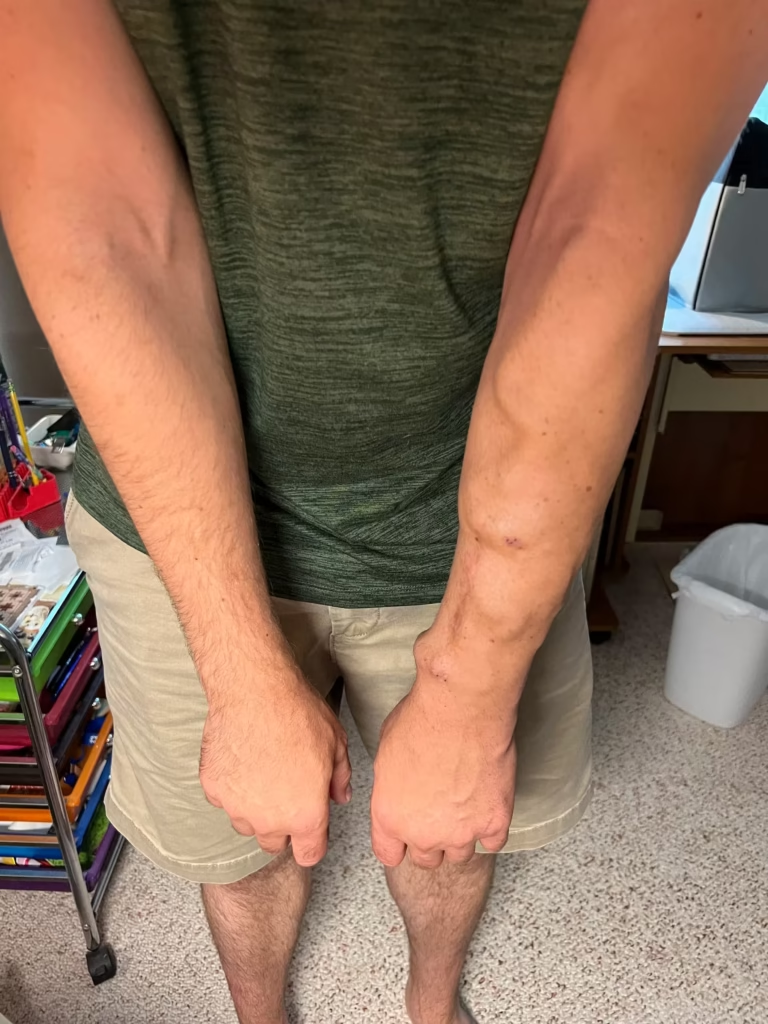
What is Dialysis Fistuloplasty?
Dialysis fistuloplasty, also known as fistula angioplasty, is a minimally invasive procedure used to open narrowed segments within a dialysis fistula or graft.
During the procedure:
- A small catheter is inserted into the blood vessel through a tiny skin puncture.
- Contrast dye is used to identify the narrowed area.
- A specialized balloon is inflated at the site of narrowing.
- The balloon widens the vessel and restores normal blood flow.
- In selected cases, a stent may be placed to keep the vessel open.
The procedure is typically performed under local anesthesia and sedation, allowing patients to return home the same day.
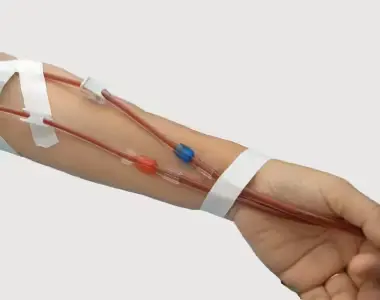
What is Central Venous Stenosis?
Central veins are large veins located in the chest and neck that carry blood back to the heart. Patients who have had previous dialysis catheters, pacemakers, or long-term central venous lines are at increased risk of developing central venous stenosis.
Symptoms may include:
- Swelling of the arm, neck, face, or chest
- Enlarged veins over the chest wall
- Poor dialysis flow rates
- Increased venous pressure during dialysis
- Recurrent fistula dysfunction
If left untreated, central venous stenosis can compromise dialysis access and significantly affect quality of life.
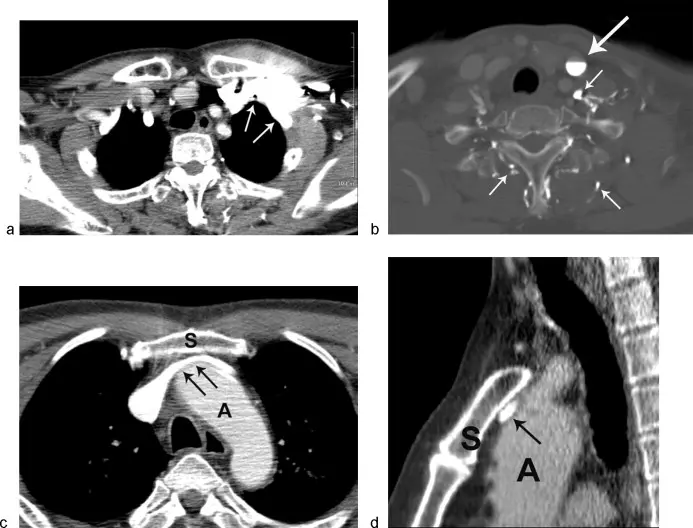
What is Central Venous Plasty?
Central Venous Plasty (Central Venous Angioplasty) is a minimally invasive procedure performed to treat narrowing or blockage of the central veins.
Using image-guided techniques, an Interventional Radiologist inserts a catheter into the affected vein and inflates a balloon to widen the narrowed segment. In some cases, a stent may be placed to maintain long-term patency.
This procedure restores blood flow, relieves swelling, and helps preserve functioning dialysis access.
Benefits of Dialysis Fistuloplasty and Central Venous Plasty
- Minimally invasive treatment
- No major surgical incision
- Preserves existing dialysis access
- Improves dialysis efficiency
- Rapid recovery and shorter hospital stay
- Reduced risk of access failure
- Same-day discharge in most patients
- High success rates with excellent clinical outcomes
Who May Need These Procedures?
You may be a candidate if you experience:
- Poor dialysis adequacy
- Reduced blood flow through the fistula
- Difficult needle placement
- Arm or facial swelling
- Repeated clotting of dialysis access
- High venous pressures during dialysis
- Recurrent access dysfunction
A detailed clinical evaluation and vascular imaging help determine the most appropriate treatment plan.
Procedure Recovery
Most patients recover quickly after the procedure. Mild discomfort or bruising at the puncture site may occur but usually resolves within a few days. Dialysis access can often be used shortly after treatment, depending on the specific clinical situation.Regular follow-up and surveillance of dialysis access help ensure long-term function and early detection of recurrent narrowing.
Why Choose Interventional Radiology?
Interventional Radiologists specialize in image-guided, minimally invasive procedures that help maintain and restore dialysis access while minimizing patient discomfort and recovery time. Their expertise allows precise treatment of vascular problems with excellent safety and effectiveness.