
Choosing between surgery and embolization for a varicocele can be confusing, especially when both treatments aim to improve blood flow and reduce symptoms. The right choice depends on the severity of the condition, symptoms, fertility goals, medical history, and individual anatomy.
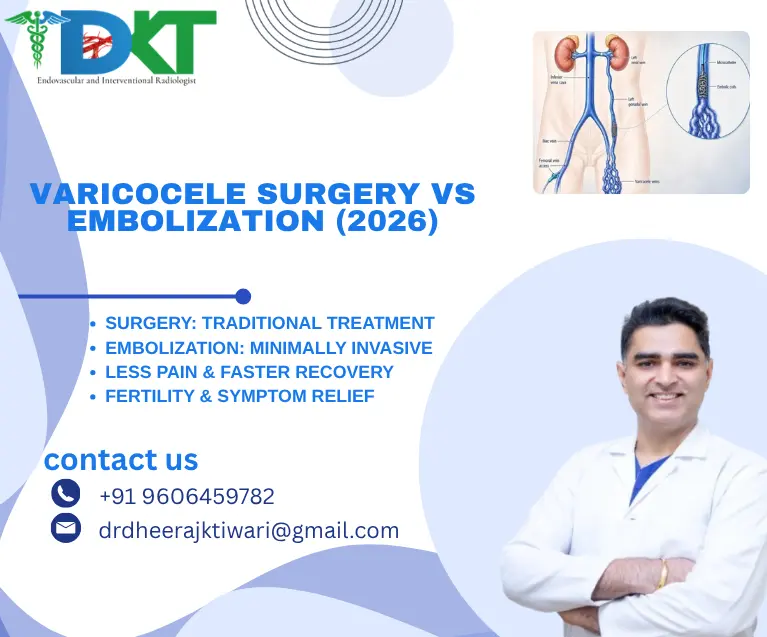
Varicocele surgery vs embolization (2026): which is better? There is no single answer for every patient. Surgery involves closing the affected veins through an operative approach, while varicocele embolization is a minimally invasive, image-guided procedure that blocks abnormal veins using a catheter and embolic materials. Both approaches can be appropriate for selected patients.
For patients considering varicocele treatment in Bengaluru, understanding the benefits, risks, recovery time, and differences between these procedures can help them prepare for an informed discussion with a specialist.
Dr. Dheeraj Tiwari, Interventional Radiologist in Bangalore, sees patients at Mazumdar Shaw Medical Center, Bommasandra. A consultation can help determine whether embolization, surgery, or monitoring is appropriate for the individual’s condition.
What Is Varicocele? Symptoms, Causes, and Diagnosis
What Is a Varicocele?
A varicocele is an enlargement of the veins inside the scrotum, the sac that contains the testicles. It develops when blood does not drain efficiently through the veins, causing blood to collect and the veins to enlarge.
The condition is relatively common and may not cause noticeable symptoms. However, some men experience discomfort, testicular changes, or fertility concerns. Treatment is not necessary for every patient; the decision depends on the clinical findings and the patient’s symptoms and goals.
Common Symptoms of Varicocele
Symptoms can differ between individuals. Some men discover a varicocele during a routine examination, while others seek medical advice because of discomfort.
Common symptoms include:
- A dull ache or heaviness in the scrotum.
- Discomfort that increases after prolonged standing or physical activity.
- Enlarged veins that may feel like a bundle of cords.
- Pain that improves when lying down.
- Differences in testicular size in some patients.
- Fertility concerns or abnormal semen analysis results.
Sudden, severe testicular pain requires urgent medical assessment because it can indicate a condition unrelated to varicocele.
What Causes a Varicocele?
A varicocele usually develops when the valves inside the veins do not regulate blood flow effectively. Blood can flow backward and accumulate, increasing pressure in the affected veins.
Differences in venous anatomy help explain why varicoceles occur more often on the left side. They are not generally caused by sexual activity, poor hygiene, or a lack of exercise.
How Is a Varicocele Diagnosed?
Diagnosis usually begins with a medical history and physical examination. The clinician may examine the scrotum while the patient is standing and lying down.
Depending on the findings, investigations may include:
- Scrotal Doppler ultrasound: Evaluates vein enlargement and abnormal blood flow.
- Semen analysis: Assesses sperm concentration, movement, and other parameters when fertility is a concern.
- Additional clinical assessment: Helps identify other possible causes of pain or swelling.
The results help determine whether observation, surgery, or varicocele embolization is appropriate.
Varicocele Surgery vs Embolization (2026): Procedure, Benefits, and Comparison
What Is Varicocele Surgery?
Varicocele surgery, also called varicocelectomy, involves closing or tying off the abnormal veins so that blood can drain through healthier veins.
Common surgical approaches include:
- Microsurgical varicocelectomy: Uses magnification to identify and close affected veins through a small incision.
- Laparoscopic surgery: Uses a camera and specialised instruments inserted through small abdominal incisions.
- Open surgical approaches: Close the affected veins through an incision in the groin or abdomen, depending on the technique.
The choice of surgery depends on the patient’s condition, the surgeon’s expertise, and the available facilities. Microsurgical repair is often preferred when suitable expertise is available because it can reduce recurrence and certain complications.
What Is Varicocele Embolization?
Varicocele embolization is a minimally invasive, image-guided procedure performed by an appropriately trained interventional radiologist.
Rather than surgically exposing the veins, the specialist inserts a thin catheter into a vein, commonly through the groin or neck. Using imaging guidance, the catheter is directed to the affected testicular vein.
Small coils or an appropriate embolic agent are then used to block the abnormal vein and redirect blood through healthier pathways.
The procedure commonly involves local anaesthesia at the access site, sometimes with sedation. Many patients return home on the same day, depending on their clinical condition and the facility’s protocol.
Varicocele Surgery vs Embolization (2026): Key Differences
| Feature | Varicocele Surgery | Varicocele Embolization |
| Treatment approach | Surgical closure of abnormal veins | Catheter-based closure of abnormal veins |
| Incisions | Small surgical incision or incisions, depending on technique | Small venous access point |
| Anaesthesia | Depends on the surgical technique; often general anaesthesia for microsurgery | Commonly local anaesthesia, sometimes with sedation |
| Hospital stay | Often outpatient, depending on the procedure | Often outpatient |
| Recovery | Frequently around one week before returning to work; longer for strenuous activity | Many patients return to desk work in one or two days |
| Potential advantages | Microsurgery can offer low recurrence and complication rates | No direct surgical incision in the groin or scrotum; generally shorter initial recovery |
| Important limitations | Surgical wound, anaesthesia, and procedure-related risks | Technical failure, radiation and contrast exposure, and possible recurrence |
Recovery times are approximate and vary by individual. The comparison should not be interpreted as a guarantee of outcomes for either procedure.
Which Treatment Is Better in 2026?
Neither treatment is universally better. The appropriate option depends on clinical indications, venous anatomy, fertility goals, previous treatment, individual preferences, and the expertise available.
The World Health Organization’s infertility guideline supports considering either surgical or radiological treatment for selected men with infertility and a clinical varicocele. It recommends individualising the decision according to feasibility, available expertise, and patient preferences.
Varicocele surgery may be suitable for patients seeking a well-established surgical repair, particularly when microsurgical expertise is available. Varicocele embolization may appeal to patients who prefer a catheter-based approach, want to avoid a surgical incision, or need assessment for recurrent varicocele after previous surgery.
Potential benefits of embolization include:
- A minimally invasive approach.
- No direct surgical incision in the scrotum.
- A relatively short initial recovery for many patients.
- The ability to assess and treat abnormal venous drainage under imaging guidance.
- An alternative to surgery in appropriately selected cases.
However, embolization can sometimes be technically unsuccessful, and the varicocele may persist or recur. Surgery also carries risks, including recurrence, infection, bleeding, hydrocele formation, and injury to surrounding structures. No treatment guarantees pain relief or improved fertility.
For this reason, the best decision in Varicocele Surgery vs Embolization (2026) should follow a proper examination and an informed discussion with the treating specialists.
Varicocele Surgery vs Embolization (2026): Recovery, Cost Factors, and FAQs
Recovery After Varicocele Surgery
Following surgery, patients may experience temporary pain, bruising, and swelling around the incision. Many return to desk-based work in approximately one week, while strenuous exercise may need to be postponed for around two weeks or longer, according to the surgeon’s instructions.
Recovery can vary depending on the surgical technique, the patient’s general health, and whether complications occur.
Recovery After Varicocele Embolization
After embolization, mild soreness or bruising at the catheter entry site may occur. Many patients return to light daily activities within 24–48 hours and resume exercise gradually, often after about one week, if their treating specialist approves.
Patients should follow their discharge instructions and avoid heavy lifting or vigorous activity until cleared.
For either treatment, persistent or worsening pain, fever, increasing swelling, or bleeding should prompt medical review. Sudden severe testicular pain requires urgent assessment.
What Factors Affect Varicocele Treatment Cost?
The cost of varicocele surgery or embolization varies between hospitals and patients. Rather than assuming a fixed price, ask for an individual estimate that considers:
- The treatment method recommended.
- Hospital and facility charges.
- The surgeon’s or interventional radiologist’s fees.
- Diagnostic tests and imaging requirements.
- Anaesthesia and medication costs.
- Embolization materials or surgical consumables.
- Follow-up visits and any additional treatment that may be required.
Patients seeking varicocele treatment in Bengaluru should request a detailed estimate from their chosen hospital after clinical evaluation.
Frequently Asked Questions
1. Is Varicocele Embolization Better Than Surgery?
Not for everyone. Embolization offers a minimally invasive alternative, while microsurgical repair may offer lower recurrence rates in suitable cases. The choice depends on the patient’s condition and available expertise.
2. Is Varicocele Embolization Painful?
Local anaesthesia helps minimise discomfort during catheter insertion. Mild soreness or bruising can occur afterwards, but individual experiences vary.
3. How Soon Can I Return to Work?
After embolization, many patients return to desk-based work within one or two days. After surgery, approximately one week may be needed. Physical jobs may require additional time.
4. Can Both Treatments Improve Fertility?
Either treatment may improve semen parameters in appropriately selected men with infertility and a clinical varicocele. Improvement is not guaranteed, and pregnancy outcomes depend on several factors.
5. Can a Varicocele Return After Treatment?
Yes. Persistence or recurrence is possible after either treatment. Follow-up assessment can help identify whether additional evaluation or treatment is necessary.
6. Is Varicocele Embolization Safe?
It is an established minimally invasive treatment, but it has risks, including bleeding at the access site, contrast reactions, vein injury, technical failure, and recurrence. A specialist should explain the risks relevant to each patient.
7. Does Every Varicocele Need Treatment?
No. Patients without significant symptoms or relevant fertility concerns may be monitored instead. Treatment decisions should follow clinical assessment.
8. Where Can I Consult a Varicocele Specialist in Bangalore?
Patients can seek assessment from an appropriately qualified urologist or interventional radiologist. Dr. Dheeraj Tiwari provides interventional radiology consultations at Mazumdar Shaw Medical Center, Bommasandra, Bengaluru.
Conclusion: Choosing the Right Varicocele Treatment in Bengaluru
When comparing Varicocele Surgery vs Embolization (2026), patients should consider more than recovery time alone. The likelihood of successful treatment, recurrence risk, potential complications, fertility goals, and personal preferences are all important.
Varicocele Surgery vs Embolization (2026) is a decision best made after reviewing the diagnosis, symptoms, and available treatment options. While surgery may be suitable for some patients, varicocele embolization offers a minimally invasive alternative for appropriately selected cases.
For patients researching Varicocele Surgery vs Embolization (2026) in Bengaluru, a specialist consultation can help clarify the benefits and limitations of each approach. Discussing Varicocele Surgery vs Embolization (2026) with qualified specialists can also help patients understand expected recovery, follow-up requirements, and treatment-related risks.
Ultimately, Varicocele Surgery vs Embolization (2026) should be assessed on an individual basis rather than through a one-size-fits-all recommendation. If you are exploring Varicocele Surgery vs Embolization (2026), arrange a consultation to discuss which approach may be appropriate for your condition.
Book a Consultation With Dr. Dheeraj Tiwari
If you are experiencing scrotal discomfort, have been diagnosed with a varicocele, or are exploring treatment options, consult an appropriately qualified specialist before making a decision.
- Doctor: Dr. Dheeraj Tiwari – Interventional Radiologist in Bangalore
- Hospital: Mazumdar Shaw Medical Center
- Address: 258/A, Hosur Road, Bommasandra Industrial Area, Anekal, Bengaluru, Karnataka 560099
- Phone: +919606459782
Book an appointment to discuss your diagnosis, treatment suitability, expected recovery, and the potential benefits and risks of varicocele embolization.