
Heavy menstrual bleeding can significantly affect everyday life. Frequent pad or tampon changes, prolonged periods, large blood clots, fatigue, and pelvic discomfort may make it difficult to work, sleep, exercise, or maintain normal routines. When heavy bleeding continues despite medication or other conservative measures, a specialist may discuss procedural treatment options.
Uterine Ablation Recovery: What to Expect is an important consideration for anyone researching treatment for heavy menstrual bleeding. Knowing what happens after a procedure, how long symptoms may last, when menstrual bleeding may improve, and which warning signs require medical attention can help patients prepare for recovery.
The term uterine ablation is commonly used when referring to endometrial ablation, a procedure that treats the inner lining of the uterus. It is different from uterine artery embolization (UAE), which is an image-guided procedure commonly used to treat symptomatic uterine fibroids. Because these treatments have different purposes, identifying the underlying cause of heavy bleeding is essential before choosing a treatment.
Patients considering Heavy Menstrual Bleeding Treatment should therefore receive an individualized evaluation rather than selecting a procedure based only on symptoms.
Uterine Ablation: Symptoms, Causes, and Diagnosis
Symptoms of Heavy Menstrual Bleeding
Heavy menstrual bleeding can present differently from one woman to another. Common symptoms include:
- Menstrual bleeding lasting longer than expected
- Needing to change sanitary products very frequently
- Passing large blood clots
- Bleeding through clothing or bedding
- Periods interfering with work, travel, exercise, or sleep
- Pelvic pressure or discomfort
- Persistent tiredness or weakness
- Symptoms associated with iron-deficiency anemia
A period that is consistently very heavy or disruptive should not simply be accepted as normal. Medical assessment can help determine whether a treatable underlying condition is responsible.
Causes of Heavy Menstrual Bleeding
Several gynecological and medical conditions can cause excessive menstrual bleeding. Common causes include:
- Uterine fibroids: Non-cancerous growths in or around the uterus that can cause heavy or prolonged periods.
- Adenomyosis: A condition in which tissue similar to the uterine lining grows into the muscular wall of the uterus.
- Endometrial polyps: Growths within the uterine cavity that can contribute to abnormal bleeding.
- Hormonal changes: Irregular ovulation can alter the normal menstrual cycle.
- Thyroid disorders: Changes in thyroid function may affect menstruation.
- Bleeding disorders: Some conditions can make menstrual bleeding unusually heavy.
- Certain medications: Some medicines can influence menstrual bleeding.
The cause determines which treatment is most appropriate. Endometrial ablation primarily targets the uterine lining, whereas uterine artery embolization is a treatment that can specifically target the blood supply of fibroids.
Diagnosis Before Treatment
A detailed assessment is important before proceeding with any Heavy Menstrual Bleeding Treatment. The doctor may review menstrual history, previous treatments, medications, pregnancy plans, and other medical conditions.
Depending on the patient’s symptoms, investigations may include:
- Blood tests
- Pregnancy testing
- Pelvic ultrasound
- Hysteroscopy
- Endometrial sampling or biopsy
- Other imaging or investigations when clinically indicated
These evaluations help identify fibroids, polyps, adenomyosis, endometrial abnormalities, anemia, or other possible causes of abnormal bleeding.
Why Diagnosis Matters
Uterine Ablation Recovery: What to Expect can only be understood properly after considering which procedure is actually being performed. Endometrial ablation and uterine artery embolization are not interchangeable.
A patient with bleeding primarily caused by the endometrial lining may be evaluated for endometrial ablation, while a patient with symptomatic fibroids may be considered for fibroid-directed treatment such as uterine artery embolization.
Uterine Ablation Treatment, Procedure, and Benefits
What Is Uterine Ablation?
Endometrial ablation is a minimally invasive procedure intended to destroy or remove the endometrial lining of the uterus. The purpose is to reduce menstrual blood loss.
Different ablation techniques use different forms of energy or technology, including radiofrequency energy, heat, heated fluid, or other methods. The specific technique depends on the equipment available and the patient’s clinical circumstances.
The procedure is generally performed through the vagina and cervix, so there is usually no abdominal incision.
What Happens During the Procedure?
Before treatment, the healthcare team evaluates the patient’s medical history and confirms that endometrial ablation is appropriate.
During the procedure, an appropriate ablation device is introduced through the cervix into the uterus. The device delivers the selected form of energy or treatment to the endometrial lining. The treated tissue subsequently heals, with the objective of reducing menstrual bleeding.
The procedure may be performed as an outpatient treatment depending on the technique, anesthesia, and patient’s medical condition.
Important Considerations
Endometrial ablation is generally considered for women who do not plan future pregnancies. Pregnancy can still occur after ablation and may be associated with serious complications. Patients should discuss contraception and future pregnancy plans with their healthcare provider before treatment.
It is also important to understand that ablation does not necessarily stop menstruation completely. The expected outcome is usually a reduction in menstrual blood loss, although individual results vary.
Benefits of Uterine Ablation
For appropriately selected patients, potential benefits can include:
- Reduced menstrual blood loss
- Less disruption from heavy periods
- Reduced dependence on menstrual products
- Improvement in daily activities
- A minimally invasive treatment approach
- No large abdominal incision
- Relatively short initial recovery for many patients
However, treatment outcomes differ between individuals. Some women may continue to experience menstrual bleeding or may require further evaluation or treatment.
Uterine Ablation vs Other Treatments
Uterine Ablation Recovery: What to Expect should also be considered alongside alternative treatment approaches.
| Treatment | Main target | Typical purpose |
| Endometrial ablation | Uterine lining | Reduce heavy menstrual bleeding |
| Uterine artery embolization | Blood supply to fibroids | Treat symptomatic uterine fibroids |
| Myomectomy | Fibroid tissue | Remove selected fibroids |
| Hysterectomy | Uterus | Definitive treatment involving removal of the uterus |
The appropriate treatment depends on the diagnosis, size and location of fibroids if present, symptoms, uterine anatomy, reproductive plans, previous treatment, and overall health.
Uterine Ablation Recovery: What to Expect After Treatment
Immediately After the Procedure
Uterine Ablation Recovery: What to Expect begins in the hours immediately following treatment. Patients may be monitored for a period before going home, depending on the procedure and anesthesia.
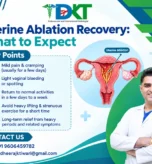
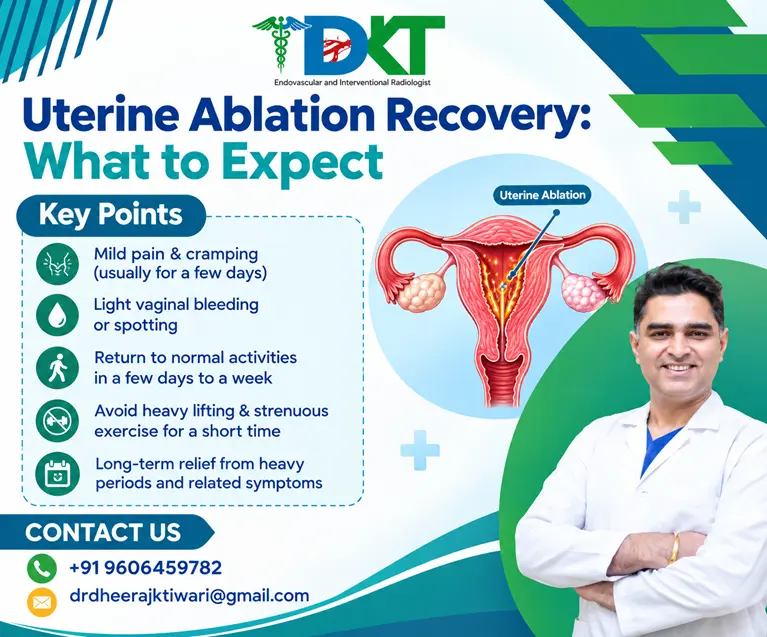
Period-like cramping is relatively common. Some patients may also experience tiredness, mild nausea, pelvic discomfort, spotting, or watery vaginal discharge.
Your treating team will provide instructions regarding medications, activity, bathing, sexual activity, and follow-up.
The First Few Days
During the first few days, most patients should prioritize rest and allow their body to recover. Light activities can generally be resumed gradually according to individual comfort and medical advice.
Walking may be suitable for many patients, but strenuous exercise, heavy lifting, and demanding physical activity should generally be postponed until the treating clinician advises that they are safe.
The exact time needed before returning to work varies. Someone with a desk-based job may recover differently from someone whose work involves prolonged standing, lifting, or physical exertion.
Vaginal Bleeding and Discharge
Bleeding, spotting, or watery discharge may occur following endometrial ablation. The amount and duration vary among patients.
Some women experience discharge for several weeks while the uterine lining heals. Follow your healthcare provider’s instructions regarding sanitary products and sexual activity during this period.
If bleeding becomes unusually heavy, persistent, or is accompanied by severe pain or fever, contact your healthcare provider.
When Will Periods Improve?
One of the most important points about Uterine Ablation Recovery: What to Expect is that the final result may not be immediate.
Menstrual bleeding can change gradually over the weeks and months following treatment. Some patients experience significantly lighter periods, while others may eventually stop menstruating. Others may continue to have periods but with less blood loss.
The response cannot be predicted with complete certainty for every patient.
Returning to Normal Activities
Recovery should be gradual. Patients should listen to their body while following the specific restrictions provided by their healthcare team.
Adequate hydration, sufficient rest, and taking medications as prescribed can support a comfortable recovery. Follow-up appointments are important because they allow the doctor to assess symptoms and determine whether additional evaluation is necessary.
Warning Signs During Recovery
Although serious complications are uncommon, patients should contact their healthcare provider if they develop:
- Heavy or persistent vaginal bleeding
- Severe or worsening pelvic or abdominal pain
- Fever or chills
- Foul-smelling vaginal discharge
- Significant dizziness or weakness
- Other unexpected or severe symptoms
Urgent assessment may be necessary if symptoms are severe or rapidly worsening.
Frequently Asked Questions
1. How long does uterine ablation recovery take?
Many patients can return to light activities within a few days, but the complete healing process and stabilization of menstrual bleeding can take longer. Recovery varies depending on the individual and the procedure performed.
2. Is cramping normal after uterine ablation?
Yes. Period-like cramping is a common short-term symptom. Your healthcare provider can recommend suitable pain relief based on your medical history.
3. How long will I have to discharge after ablation?
Watery, blood-stained discharge or spotting can continue for a period of time after treatment. The duration varies between patients. Follow your doctor’s specific aftercare instructions.
4. Will uterine ablation stop my periods completely?
Not necessarily. Some women experience very light periods or no periods, while others continue to menstruate with reduced bleeding.
5. Can I become pregnant after uterine ablation?
Pregnancy remains possible after endometrial ablation. However, pregnancy following ablation can involve serious risks. Appropriate contraception should be discussed with your healthcare provider.
6. Is uterine ablation suitable for fibroid-related bleeding?
It depends on the characteristics of the fibroids and the individual patient. When fibroids are responsible for heavy bleeding, fibroid-directed treatments such as uterine artery embolization may be considered.
7. What is the difference between uterine ablation and uterine artery embolization?
Endometrial ablation treats the inner lining of the uterus. Uterine artery embolization reduces blood flow to targeted uterine fibroids. They are different procedures used for different clinical situations.
8. When can I exercise after uterine ablation?
The timing varies according to the procedure and individual recovery. Light activity may be resumed gradually, while strenuous exercise should generally wait until your treating doctor gives clearance.
9. Can uterine artery embolization treat heavy menstrual bleeding?
Yes. When heavy bleeding is caused by symptomatic uterine fibroids, uterine artery embolization can be considered as a minimally invasive fibroid treatment after appropriate evaluation.
10. When should I contact my doctor after ablation?
Contact your healthcare provider if you develop heavy bleeding, severe or worsening pain, fever, foul-smelling discharge, significant weakness, or other concerning symptoms.
Heavy Menstrual Bleeding Treatment With Dr. Dheeraj Tiwari
Patients looking for Heavy Menstrual Bleeding Treatment in Bangalore should first establish the underlying cause of their symptoms.
Dr. Dheeraj Tiwari – Interventional Radiologist in Bangalore provides minimally invasive, image-guided interventional radiology treatments. His services include uterine artery embolization, uterine fibroid embolization, vascular interventions, tumour ablation, hepatobiliary interventions, oncology interventions, and other image-guided procedures.
For women whose heavy menstrual bleeding is associated with symptomatic uterine fibroids, Dr. Dheeraj Tiwari can evaluate whether a minimally invasive treatment such as uterine artery embolization may be appropriate.
The treatment decision should be based on medical history, symptoms, imaging findings, reproductive considerations, and individual clinical requirements.
Conclusion
Uterine Ablation Recovery: What to Expect varies from patient to patient. Mild cramping, spotting, and watery discharge may occur during the early healing period, while the final effect on menstrual bleeding may take time to become apparent.
The most important part of managing heavy menstrual bleeding is identifying its underlying cause. Endometrial ablation may be appropriate for selected patients, while fibroid-related bleeding may require a different approach, including uterine artery embolization.
If heavy periods are affecting your quality of life, do not ignore the symptoms. A specialist evaluation can help determine the cause and identify suitable treatment options.
Book an appointment with Dr. Dheeraj Tiwari, Interventional Radiologist in Bangalore, to discuss your symptoms, understand your diagnosis, and explore appropriate minimally invasive treatment options for heavy menstrual bleeding and uterine fibroids.