
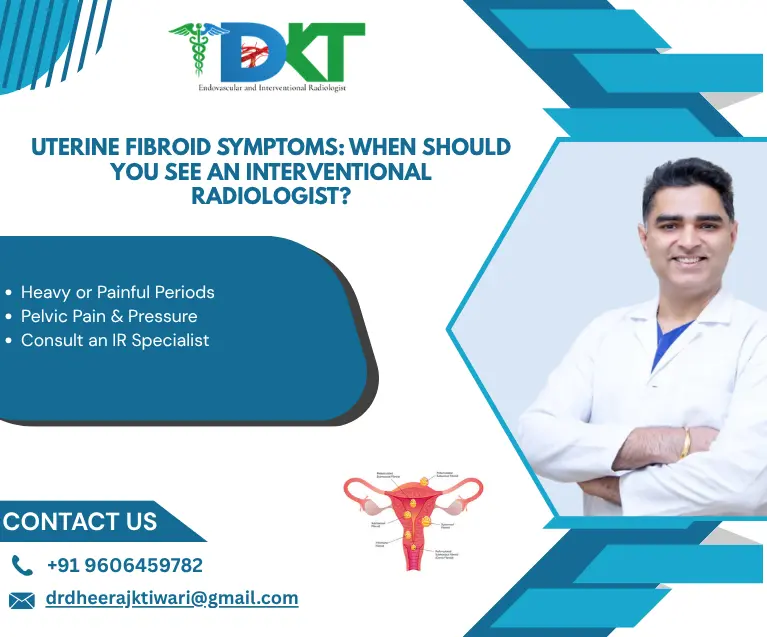
Uterine fibroids are non-cancerous growths that develop in or around the uterus. They are common during the reproductive years and may cause symptoms ranging from heavy menstrual bleeding and pelvic pain to abdominal pressure and fertility-related concerns. While some fibroids do not require immediate treatment, others can significantly affect a woman’s comfort, daily activities, and quality of life.
Understanding Uterine Fibroid Symptoms: When Should You See an Interventional Radiologist? can help women recognise when medical evaluation may be beneficial. The appropriate time to seek specialist care depends on the severity of symptoms, the size and location of the fibroids, and individual reproductive goals.
Women looking for a Fibroid Specialist in Bengaluru may benefit from an assessment by a gynaecologist or an interventional radiologist experienced in fibroid management. Interventional radiologists offer minimally invasive treatment options, including uterine fibroid embolisation (UFE), for appropriately selected patients.
Dr. Dheeraj Tiwari is an interventional radiologist associated with Mazumdar Shaw Medical Center, 258/A, Hosur Road, Bommasandra Industrial Area, Anekal, Bengaluru, Karnataka 560099. Patients can enquire about consultation availability and suitable treatment options based on their individual medical condition.
What Are Uterine Fibroids? Symptoms and Causes
What are uterine fibroids?
Uterine fibroids, also called leiomyomas or myomas, are growths made of muscle and connective tissue that develop in the uterus. They may occur as a single growth or as multiple fibroids of different sizes.
Fibroids are classified according to their location:
- Intramural fibroids: Develop within the muscular wall of the uterus.
- Submucosal fibroids: Grow towards the uterine cavity and may contribute to heavy menstrual bleeding.
- Subserosal fibroids: Grow towards the outer surface of the uterus and may cause pressure on nearby organs.
- Pedunculated fibroids: Attach to the uterus through a narrow stalk.
The location and size of a fibroid can influence the symptoms it causes and the treatment options that may be suitable.
What are the common symptoms of uterine fibroids?
Many women with uterine fibroids have no noticeable symptoms. When symptoms occur, they may include:
- Heavy or prolonged menstrual bleeding.
- Painful periods or persistent pelvic discomfort.
- A feeling of pressure or fullness in the lower abdomen.
- Frequent urination when a fibroid presses on the bladder.
- Constipation or difficulty passing stools due to pressure on the bowel.
- Lower back pain or discomfort during sexual intercourse.
- Abdominal enlargement or bloating.
- Fatigue, weakness, or breathlessness related to iron-deficiency anemia caused by heavy bleeding.
Symptoms may gradually worsen or interfere with work, sleep, exercise, and other everyday activities.
Understanding Uterine Fibroid Symptoms: When Should You See an Interventional Radiologist? begins with recognising that persistent bleeding, pelvic pressure, or pain deserves medical evaluation rather than being dismissed as a normal part of menstruation.
Seek urgent medical attention if you experience very heavy bleeding accompanied by dizziness, fainting, severe weakness, or sudden, intense pelvic pain.
What causes uterine fibroids?
The exact cause of uterine fibroids is not fully understood. However, several factors are associated with their development and growth.
Hormonal influences: Oestrogen and progesterone can influence fibroid growth.
Genetic factors: Fibroids may run in families, suggesting a genetic component.
Age and reproductive stage: Fibroids commonly develop during the reproductive years and may change in size as hormone levels change.
Family history: Having close relatives with fibroids may increase the likelihood of developing them.
Other associated factors: Body weight and certain metabolic factors may influence risk.
Fibroids are not caused by poor personal hygiene, and their presence does not automatically mean that cancer is present. Most uterine fibroids are benign.
When Should You See a Fibroid Specialist in Bengaluru?
When do uterine fibroid symptoms require specialist attention?
You should consider consulting a specialist if fibroid symptoms are persistent, recurrent, worsening, or affecting your quality of life.
An assessment is particularly important if you experience:
- Heavy menstrual bleeding that affects daily activities.
- Repeatedly low haemoglobin or iron-deficiency anemia.
- Pelvic pain or pressure that does not improve.
- Frequent urination or bowel symptoms associated with pelvic pressure.
- Fibroids that increase in size or cause worsening symptoms.
- Fertility concerns or difficulties related to the position of a fibroid.
- Symptoms that continue despite medication.
The question Uterine Fibroid Symptoms: When Should You See an Interventional Radiologist? is especially relevant when you want to understand alternatives to surgery or have been advised to consider a procedure.
A gynaecologist can evaluate menstrual symptoms, reproductive health, and the condition of the uterus. An interventional radiologist can assess whether a minimally invasive image-guided procedure may be appropriate.
How are uterine fibroids diagnosed?
Diagnosis usually begins with a review of symptoms, menstrual history, medical background, and physical examination.
Common investigations include:
Pelvic ultrasound: Helps identify fibroids, assess their size, and determine their location.
MRI of the pelvis: May provide more detailed information about the number, position, and characteristics of fibroids, particularly when planning a procedure.
Complete blood count: Helps identify anaemia associated with heavy menstrual bleeding.
Iron studies: May be recommended if iron deficiency is suspected.
Other investigations may be appropriate depending on the symptoms and clinical findings. Heavy or irregular bleeding sometimes requires additional assessment to rule out other causes.
For women seeking a Fibroid Specialist in Bengaluru, diagnostic findings should be reviewed alongside symptoms, overall health, and future pregnancy plans. The presence of a fibroid on a scan does not automatically mean treatment is necessary.
What is the role of an interventional radiologist for fibroids?
An interventional radiologist specialises in image-guided procedures performed through small skin punctures or other minimally invasive approaches.
For selected patients with symptomatic uterine fibroids, the specialist may recommend uterine fibroid embolisation. This procedure reduces the blood supply to the fibroids, causing them to shrink over time.
An Interventional Radiologist for Fibroids works with the patient’s wider medical team to determine whether embolisation is appropriate. The assessment considers fibroid characteristics, symptoms, medical history, and reproductive priorities.
Uterine Fibroid Treatment Options, Benefits and Recovery
What treatment options are available for uterine fibroids?
Treatment depends on symptom severity, fibroid size and location, age, general health, and whether future pregnancy is desired.
1. Monitoring and medication
Women with small or asymptomatic fibroids may not need immediate intervention. Periodic follow-up may be sufficient.
Medication may help control heavy bleeding, menstrual pain, or other symptoms. Certain hormonal treatments can reduce bleeding, while other medicines may temporarily reduce fibroid size in selected circumstances.
Medication does not permanently remove every fibroid, and its suitability depends on the patient’s medical history.
2. Uterine fibroid embolisation (UFE)
Uterine fibroid embolisation, also known as uterine artery embolisation (UAE), is a minimally invasive procedure performed by an appropriately trained interventional radiologist.
The procedure generally involves the following steps:
- Pre-procedure assessment: Imaging and medical evaluation help establish whether embolisation is suitable.
- Access to an artery: The specialist inserts a thin catheter through a small puncture, commonly in the wrist or groin.
- Image-guided navigation: Using imaging, the catheter is guided towards the arteries supplying the uterus.
- Embolisation: Tiny particles are delivered to reduce blood flow to the fibroids.
- Recovery and follow-up: The patient receives pain management and follow-up care to monitor recovery and symptom improvement.
The fibroids generally shrink gradually over several weeks to months rather than disappearing immediately.
3. Myomectomy
Myomectomy is a surgical procedure that removes fibroids while preserving the uterus. It may be suitable for women with specific fibroid patterns, particularly when pregnancy is a future goal.
Depending on the fibroids, surgery may be performed hysteroscopically, laparoscopically, robotically, or through an open abdominal approach.
4. Hysterectomy
Hysterectomy involves removing the uterus. It is a definitive treatment for uterine fibroids when appropriate, but it permanently ends the ability to carry a pregnancy.
The decision requires careful discussion of alternatives, risks, and the patient’s preferences.
UFE versus myomectomy: What is the difference?
| Factor | Uterine fibroid embolisation | Myomectomy |
| Approach | Image-guided, minimally invasive procedure | Surgical removal of fibroids |
| Uterus | Preserved | Preserved |
| Fibroid management | Reduces blood supply, allowing fibroids to shrink | Removes selected fibroids directly |
| Hospital stay | Often shorter, depending on recovery | Varies by surgical approach |
| Pregnancy considerations | Requires individual counselling; fertility effects remain uncertain | Often considered when pregnancy is desired, depending on the case |
| Recovery | Cramping and fatigue may occur for days or longer | Recovery depends on the type of surgery |
Neither option is universally best. Women who wish to become pregnant should discuss fertility outcomes with their gynaecologist and interventional radiologist before choosing a treatment.
What are the benefits and risks of uterine fibroid embolisation?
For appropriately selected patients, UFE may offer several benefits:
- No major abdominal incision is usually required.
- Heavy menstrual bleeding may improve.
- Pelvic pressure and related discomfort may decrease.
- Multiple fibroids can be treated during the same procedure.
- Recovery is often shorter than after major open surgery.
- The uterus is preserved.
However, UFE also has potential risks. These include post-procedure pain, cramping, nausea, fever, infection, and, less commonly, injury to surrounding tissues or premature ovarian insufficiency. Some patients may need further treatment if symptoms persist or fibroids recur.
UFE is not suitable for everyone. Pregnancy plans, active pelvic infection, certain fibroid characteristics, and other medical factors may affect the decision.
What is recovery like after fibroid embolisation?
Recovery varies between individuals. Cramping and pelvic pain are common during the initial days, and fatigue may continue for a short period. Some patients return to routine activities within about one to two weeks, although recovery may take longer depending on individual circumstances.
After treatment, patients should:
- Follow the prescribed pain-management plan.
- Rest and gradually resume normal activities.
- Attend scheduled follow-up appointments.
- Report persistent fever, worsening pain, heavy bleeding, or unusual discharge.
- Follow instructions regarding physical activity and wound care.
Symptom improvement is usually gradual. Menstrual bleeding may become lighter over subsequent cycles, while pressure symptoms can improve as the fibroids shrink.
The most appropriate treatment plan depends on the patient’s individual condition and should be confirmed through specialist assessment.
Frequently Asked Questions About Uterine Fibroids
1. When should I see an interventional radiologist for uterine fibroids?
Consider an appointment if fibroids cause heavy bleeding, pelvic pressure, pain, or other persistent symptoms and you want to discuss minimally invasive treatment options. A specialist can determine whether UFE is appropriate.
2. Can uterine fibroids be treated without surgery?
Yes. Monitoring, medication, and uterine fibroid embolisation may be appropriate alternatives to surgical treatment for selected patients. The best option depends on the fibroid characteristics and treatment goals.
3. Is uterine fibroid embolisation painful?
Cramping and pelvic pain commonly occur after embolisation, particularly during the initial recovery period. Medication and supportive care help manage these symptoms.
4. How long does it take for fibroids to shrink after UFE?
Fibroids generally shrink gradually over several weeks to months. The timing and degree of shrinkage vary according to fibroid characteristics and individual response.
5. Can I get pregnant after uterine fibroid embolisation?
Pregnancy may be possible after UFE, but its effects on fertility and pregnancy outcomes remain uncertain. Women who plan to become pregnant should discuss the potential benefits, risks, and alternatives with their medical team before treatment.
6. Does every uterine fibroid need treatment?
No. Many fibroids cause no symptoms and need only observation. Treatment is generally considered when symptoms, complications, or other clinical factors justify it.
7. How do I choose a Fibroid Specialist in Bengaluru?
Look for a qualified specialist with experience in fibroid evaluation and the treatment being considered. Ask about the expected benefits, risks, alternative procedures, follow-up arrangements, and how the plan fits your reproductive goals.
8. How much does uterine fibroid treatment cost in Bengaluru?
Costs vary according to the investigations, procedure, hospital stay, medicines, and individual clinical requirements. Contact the hospital for a personalised estimate after the treatment plan has been established.
9. Where can I consult an Interventional Radiologist for Fibroids in Bengaluru?
Patients can enquire about consultation arrangements with Dr. Dheeraj Tiwari at Mazumdar Shaw Medical Center, 258/A, Hosur Road, Bommasandra Industrial Area, Anekal, Bengaluru, Karnataka 560099. Confirm appointment availability and the services offered directly with the hospital.
Conclusion: Get Expert Guidance for Uterine Fibroid Symptoms in Bengaluru
Uterine fibroids can cause heavy menstrual bleeding, pelvic pain, abdominal pressure, and other symptoms that affect everyday life. Recognising these symptoms early can help women obtain an accurate diagnosis and understand their treatment options.
Uterine Fibroid Symptoms: When Should You See an Interventional Radiologist? The answer depends on your symptoms, scan findings, general health, and future pregnancy plans. If fibroids are affecting your quality of life, a specialist consultation can help you compare medication, uterine fibroid embolisation, myomectomy, and other appropriate options.
Dr. Dheeraj Tiwari is an interventional radiologist associated with Mazumdar Shaw Medical Center in Bengaluru. Patients can enquire about assessment for symptomatic uterine fibroids and whether a minimally invasive treatment approach may be suitable.
Book an appointment or enquire about a consultation:
- Doctor: Dr. Dheeraj Tiwari – Interventional Radiologist
- Address: 258/A, Hosur Road, Bommasandra Industrial Area, Anekal, Bengaluru, Karnataka 560099
- Contact number: +919606459782
Call +919606459782 to enquire about appointment availability and consultation arrangements. Treatment recommendations will depend on your individual medical condition, diagnostic findings, and personal goals.