
Thyroid Swelling Treatment Without Surgery
Thyroid swelling, also known as goiter or thyroid nodules, is a common condition that can affect people of all ages. It often appears as a visible lump or enlargement in the neck and may cause discomfort, difficulty swallowing, or hormonal imbalances. With advancements in modern medicine, thyroid swelling treatment without surgery has become a safe, effective, and preferred option for many patients who wish to avoid traditional surgical procedures.
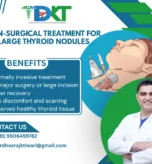
Non-surgical treatments focus on reducing the size of the thyroid swelling, relieving symptoms, and preserving the normal function of the thyroid gland. These treatments are minimally invasive, involve little to no pain, and offer quicker recovery compared to conventional surgery.
Understanding Thyroid Swelling
The thyroid is a butterfly-shaped gland located at the front of the neck. It produces hormones that regulate metabolism, energy levels, and various bodily functions. Thyroid swelling occurs when the gland enlarges or develops nodules.
Common causes include:
- Iodine deficiency
- Hormonal imbalance
- Benign thyroid nodules
- Thyroid cysts (fluid-filled sacs)
- Inflammation (thyroiditis)
In most cases, thyroid swelling is non-cancerous, but proper evaluation is essential to determine the exact cause and suitable treatment.
Symptoms of Thyroid Swelling
Patients seeking thyroid swelling treatment without surgery may experience a range of symptoms, such as:
- Visible lump or swelling in the neck
- Difficulty swallowing or breathing
- Tightness or discomfort in the throat
- Hoarseness or change in voice
- Unexplained weight gain or loss
- Fatigue or weakness
Some individuals may not have noticeable symptoms, and the condition may be detected during routine medical examinations.
Why Choose Thyroid Swelling Treatment Without Surgery?
Traditional thyroid surgery involves partial or complete removal of the gland, which may lead to complications or lifelong medication. In contrast, thyroid swelling treatment without surgery offers several advantages:
- No cuts, stitches, or scars
- Minimal pain and discomfort
- Faster recovery time
- Reduced risk of complications
- Preservation of thyroid function
- Day-care procedures with short hospital stay
These benefits make non-surgical treatments highly appealing for patients.
Advanced Non-Surgical Treatment Options
Modern healthcare provides multiple effective techniques for thyroid swelling treatment without surgery, depending on the type and size of the swelling.
1. Radiofrequency Ablation (RFA)
Radiofrequency Ablation is one of the most widely used non-surgical treatments for benign thyroid nodules.
Procedure:
A thin needle electrode is inserted into the nodule, and heat energy is applied to destroy abnormal tissue.
Benefits:
- Significant reduction in nodule size
- Minimal discomfort
- Quick recovery
- No hospitalization required
2. Laser Ablation Therapy (LAT)
Laser Ablation Therapy uses laser energy to shrink thyroid nodules.
Advantages:
- High precision
- Minimal damage to surrounding tissues
- Safe and effective
- Outpatient procedure
This technique is commonly used as part of thyroid swelling treatment without surgery.
3. Ethanol Ablation (EA)
Ethanol ablation involves injecting alcohol directly into cystic thyroid nodules.
Best for:
- Fluid-filled nodules
- Recurrent cysts
Benefits:
- Simple and cost-effective
- Quick procedure
- High success rate
4. High-Intensity Focused Ultrasound (HIFU)
HIFU is a completely non-invasive technique that uses focused ultrasound waves to destroy abnormal thyroid tissue.
Key benefits:
- No needles or incisions
- Completely scar-free
- Safe and comfortableWho is Eligible for Non-Surgical Treatment?
Not every patient requires surgery. You may be a suitable candidate for thyroid swelling treatment without surgery if you have:
- Benign (non-cancerous) thyroid nodules
- Mild to moderate symptoms
- Cosmetic concerns due to swelling
- Normal thyroid hormone levels
- Preference to avoid surgery
A proper medical evaluation is necessary to confirm eligibility.
Diagnostic Evaluation
Before starting treatment, doctors perform detailed tests to determine the nature of the thyroid swelling.
Common diagnostic methods include:
- Ultrasound imaging
- Thyroid function tests (T3, T4, TSH)
- Fine Needle Aspiration (FNA) biopsy
- CT or MRI scans (if required)
Accurate diagnosis ensures effective and safe thyroid swelling treatment without surgery.
Benefits of Non-Surgical Treatment
Choosing thyroid swelling treatment without surgery provides several long-term benefits:
- No visible scars
- Preservation of thyroid gland
- Minimal downtime
- Reduced risk of infection
- Faster return to daily activities
- Improved quality of life
These advantages make non-surgical approaches highly preferred in modern healthcare.
Procedure and Recovery
Procedure Details
- Performed under local anesthesia
- Takes approximately 30–60 minutes
- Minimally invasive or non-invasive
- Usually a day-care procedure
Recovery
- Most patients return to normal activities within 1–2 days
- Mild swelling or discomfort may occur temporarily
- Regular follow-up is recommended
Risks and Safety
Non-surgical treatments are generally safe, but minor risks may include:
- Temporary swelling or redness
- Mild pain or discomfort
- Rare chances of infection
These risks are minimal when performed by experienced specialists.
Aftercare Tips
Proper aftercare plays a crucial role in recovery:
- Follow medical advice carefully
- Take prescribed medications
- Avoid heavy physical activity for a few days
- Maintain a healthy diet
- Attend follow-up appointments
Good aftercare ensures the success of thyroid swelling treatment without surgery.
Lifestyle and Prevention
Maintaining a healthy lifestyle can help prevent thyroid issues:
- Ensure adequate iodine intake
- Manage stress levels
- Eat a balanced diet
- Avoid excessive exposure to pollutants
- Get regular health check-ups
1. Is thyroid swelling treatment without surgery safe?
Yes, it is safe and effective when performed by qualified medical professionals.
2. Will the swelling completely go away?
Most treatments significantly reduce the size of the swelling and relieve symptoms.
3. Is the procedure painful?
No, it is minimally invasive and usually performed under local anesthesia.
4. How long does recovery take?
Recovery is quick, and most patients resume normal activities within a few days.
5. Can surgery be avoided completely?
In many cases, yes. Surgery is only required for complex or cancerous conditions.
Conclusion
With modern advancements, thyroid swelling treatment without surgery has become a reliable and effective solution for managing thyroid nodules and enlargement. These minimally invasive techniques provide excellent results with minimal discomfort and faster recovery.
If you are experiencing symptoms of thyroid swelling, early diagnosis and proper treatment can help prevent complications and improve your overall health. Non-surgical options allow patients to achieve relief without the risks associated with traditional surgery, making them an ideal choice for safe and effective care.