
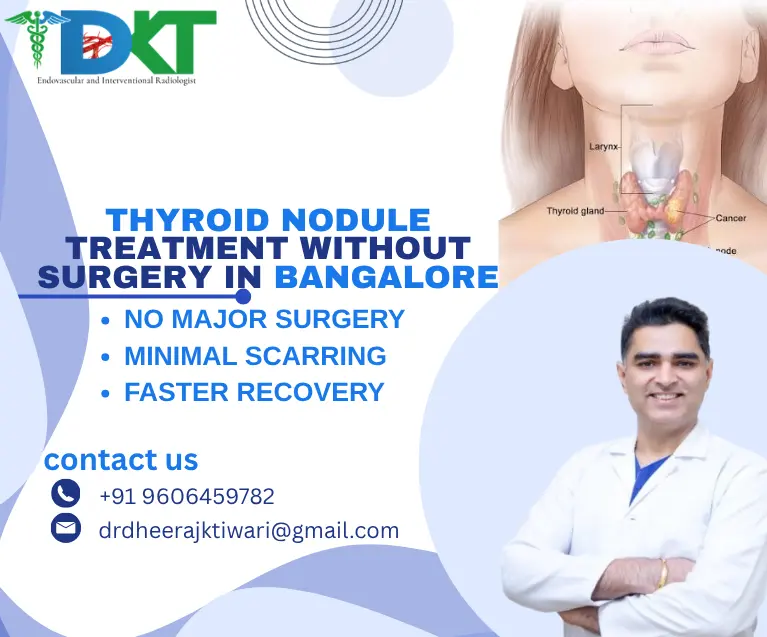
Thyroid nodules are small lumps or abnormal growths that develop inside the thyroid gland, a butterfly-shaped gland located in the front of the neck. While many thyroid nodules are harmless and do not cause serious health problems, some may grow over time, create discomfort, affect swallowing, change the appearance of the neck, or require medical treatment.
Traditionally, thyroid nodules that required intervention were often treated with surgery, which involved removing part or all of the thyroid gland. However, with advancements in medical technology, patients now have access to minimally invasive treatment options that can reduce or eliminate thyroid nodules without the need for open surgery.
Thyroid Nodule Treatment Without Surgery is becoming an increasingly preferred option for patients looking for effective treatment with fewer risks, faster recovery, and preservation of normal thyroid function. In Bangalore, advanced procedures like Thyroid Nodule Ablation are helping patients manage benign thyroid nodules safely without undergoing traditional surgery.
Dr. Dheeraj Tiwari, an experienced Interventional Radiologist in Bangalore, provides advanced image-guided minimally invasive treatments for thyroid nodules and other conditions. His expertise focuses on offering patient-friendly procedures with precision, safety, and faster recovery.
Understanding Thyroid Nodules
A thyroid nodule is an abnormal collection of thyroid tissue that forms a lump within the thyroid gland. These nodules can be:
- Benign (non-cancerous) – Most thyroid nodules fall into this category.
- Suspicious or malignant (cancerous) – A smaller percentage may require further evaluation and treatment.
Thyroid nodules can be solid, fluid-filled (cystic), or a combination of both. Many people may have thyroid nodules without experiencing any symptoms, and they are often detected during routine health check-ups or imaging tests.
When a thyroid nodule becomes large or causes symptoms, treatment may be recommended. Earlier, surgery was the primary option, but today Non-Surgical Thyroid Nodule Treatment provides an alternative approach for suitable patients.
Symptoms of Thyroid Nodules
Many thyroid nodules do not produce noticeable symptoms. However, larger nodules may cause visible changes or discomfort.
Common symptoms include:
Visible Lump in the Neck
A noticeable swelling or lump in the front of the neck is one of the most common signs of a thyroid nodule.
Difficulty Swallowing
Large nodules may put pressure on the food pipe, causing discomfort while swallowing food or liquids.
Breathing Difficulty
In some cases, enlarged thyroid nodules may compress the windpipe and create breathing problems.
Voice Changes
Pressure on nearby nerves may lead to hoarseness or changes in voice.
Neck Discomfort
Some patients experience a feeling of fullness, pressure, or discomfort around the thyroid area.
Hormonal Symptoms
Certain thyroid nodules can affect thyroid hormone production and may cause symptoms such as:
- Increased heartbeat
- Unexplained weight changes
- Fatigue
- Anxiety
- Heat or cold intolerance
If you notice any thyroid-related symptoms, early evaluation can help determine the right treatment approach.
Causes and Risk Factors of Thyroid Nodules
The exact reason why thyroid nodules develop is not always known. However, several factors may increase the risk.
Iodine Deficiency
Insufficient iodine intake can affect thyroid function and contribute to thyroid enlargement and nodule formation.
Thyroid Tissue Overgrowth
Sometimes thyroid cells grow abnormally and form a lump inside the gland.
Thyroid Cysts
Fluid-filled areas within the thyroid gland can appear as nodules.
Family History
People with a family history of thyroid disorders may have a higher chance of developing thyroid nodules.
Previous Radiation Exposure
Exposure to radiation around the neck area may increase the risk of thyroid abnormalities.
Age and Gender
Thyroid nodules are more common with increasing age and occur more frequently in women.
Diagnosis of Thyroid Nodules
Before recommending any treatment, doctors perform a detailed evaluation to understand the nature of the thyroid nodule.
Physical Examination
The doctor examines the neck area to assess the size, location, and characteristics of the nodule.
Thyroid Ultrasound
Ultrasound is the most common imaging test used to evaluate thyroid nodules. It helps determine:
- Size of the nodule
- Shape and structure
- Solid or cystic nature
- Suspicious features
Blood Tests
Thyroid function tests help measure hormone levels, including:
- TSH (Thyroid Stimulating Hormone)
- T3
- T4
These tests determine whether the thyroid gland is functioning normally.
Fine Needle Aspiration Cytology (FNAC)
FNAC involves collecting a small sample of cells from the thyroid nodule using a thin needle. The sample is examined to determine whether the nodule is benign or requires further management.
Imaging Guidance
Advanced ultrasound guidance helps specialists accurately plan minimally invasive procedures like Thyroid Nodule Ablation.
Thyroid Nodule Treatment Without Surgery: Advanced Treatment Options
Thyroid Nodule Treatment Without Surgery offers patients an alternative to traditional thyroid surgery by using minimally invasive techniques. These procedures aim to reduce the size of the nodule while preserving healthy thyroid tissue.
Thyroid Nodule Ablation
Thyroid Nodule Ablation is a minimally invasive procedure that uses heat energy to destroy abnormal thyroid tissue. Over time, the treated nodule gradually shrinks, reducing symptoms and improving neck appearance.
The procedure is performed under ultrasound guidance, allowing the specialist to precisely target the nodule while protecting surrounding structures.
How Thyroid Nodule Ablation Works
- The patient receives local anaesthesia to ensure comfort.
- Ultrasound imaging is used to locate the thyroid nodule.
- A thin ablation needle is carefully inserted into the nodule.
- Controlled energy is delivered to heat and destroy the abnormal tissue.
- The treated area gradually reduces in size over the following months.
This advanced technique is suitable for many patients with benign thyroid nodules, especially those who want to avoid surgery.
Benefits of Non-Surgical Thyroid Nodule Treatment
Choosing Non-Surgical Thyroid Nodule Treatment provides several advantages compared with traditional thyroid surgery.
No Large Surgical Incision
Unlike surgery, ablation requires only a small needle puncture, reducing scarring.
Preservation of Thyroid Function
Since healthy thyroid tissue is preserved, the risk of needing lifelong thyroid hormone medication may be reduced.
Minimal Pain and Discomfort
The procedure is performed using local anaesthesia, making it comfortable for most patients.
Faster Recovery
Most patients can return to normal daily activities quickly after treatment.
Short Hospital Stay
Thyroid Nodule Ablation is usually performed as a day-care procedure, allowing patients to go home the same day.
Lower Risk of Surgical Complications
Compared with surgery, minimally invasive procedures generally have fewer risks related to large incisions and general anaesthesia.
Recovery After Thyroid Nodule Ablation
One of the major advantages of Thyroid Nodule Treatment Without Surgery is the faster recovery period compared with traditional thyroid surgery.
Since the procedure is minimally invasive and does not involve a large incision, most patients experience minimal discomfort and can return home on the same day.
After the Procedure
Patients may experience mild symptoms such as:
- Slight neck discomfort
- Mild swelling around the treatment area
- Temporary feeling of tightness in the neck
- Minor bruising near the needle insertion site
These symptoms usually improve within a few days.
Follow-Up Monitoring
Regular follow-up appointments are important to monitor the reduction in thyroid nodule size. Ultrasound examinations are commonly performed after treatment to evaluate the progress.
The treated nodule gradually shrinks over several months. The reduction depends on factors such as:
- Initial size of the nodule
- Type of nodule
- Energy delivered during ablation
- Individual healing response
Most patients experience improvement in symptoms as the nodule reduces in size.
Thyroid Nodule Ablation vs Thyroid Surgery: Which Is Better?
Both thyroid surgery and ablation have their own advantages. The right treatment depends on the patient’s medical condition, nodule characteristics, symptoms, and overall health.
| Feature | Thyroid Nodule Ablation | Thyroid Surgery |
| Procedure Type | Minimally invasive | Open surgical procedure |
| Incision | Small needle puncture | Neck incision |
| Anaesthesia | Usually local anaesthesia | General anaesthesia |
| Hospital Stay | Usually same-day discharge | May require longer stay |
| Recovery Time | Faster recovery | Longer recovery period |
| Thyroid Tissue | Preserved | Part or all may be removed |
| Scar Formation | Minimal or no visible scar | Possible surgical scar |
| Thyroid Hormone Requirement | Lower risk | May require lifelong medication |
For suitable patients with benign thyroid nodules, Thyroid Nodule Treatment Without Surgery can provide an effective alternative while maintaining normal thyroid function.
About Dr. Dheeraj Tiwari – Interventional Radiologist in Bangalore
Dr. Dheeraj Tiwari is a skilled Interventional Radiologist in Bangalore specializing in advanced image-guided minimally invasive procedures. His approach focuses on providing safe, precise, and patient-friendly treatments that avoid unnecessary major surgeries whenever possible.
With expertise in interventional radiology techniques, Dr. Tiwari uses advanced imaging guidance to perform procedures with accuracy and improved patient comfort.
His focus areas include minimally invasive treatments for various medical conditions, helping patients achieve better outcomes with reduced recovery time.
Services Offered by Dr. Dheeraj Tiwari
Dr. Dheeraj Tiwari provides advanced interventional radiology services, including:
Thyroid Nodule Ablation
A minimally invasive procedure designed to reduce benign thyroid nodules without traditional surgery.
Uterine Fibroid Embolization (UFE)
A non-surgical treatment option for uterine fibroids that helps reduce fibroid size and related symptoms.
Varicose Vein Treatment
Advanced image-guided procedures for managing varicose veins with minimal discomfort.
Prostate Artery Embolization (PAE)
A minimally invasive treatment option for enlarged prostate (BPH) symptoms.
Vascular and Image-Guided Procedures
Specialized procedures using advanced imaging technology for accurate diagnosis and treatment.
Dr. Dheeraj Tiwari combines clinical expertise with modern technology to provide personalized treatment plans based on each patient’s condition.
Frequently Asked Questions (FAQs)
1. What is Thyroid Nodule Treatment Without Surgery?
Thyroid Nodule Treatment Without Surgery refers to minimally invasive procedures used to treat thyroid nodules without removing the thyroid gland through traditional surgery. Techniques like Thyroid Nodule Ablation help reduce the size of nodules while preserving thyroid function.
2. Is Thyroid Nodule Ablation safe?
Yes, Thyroid Nodule Ablation is considered a safe minimally invasive procedure when performed by an experienced specialist. Ultrasound guidance helps ensure accurate treatment while protecting surrounding tissues.
3. Who is suitable for Thyroid Nodule Ablation?
Patients with benign thyroid nodules that are causing symptoms, increasing in size, or creating cosmetic concerns may be suitable candidates. A detailed evaluation, including ultrasound and FNAC reports, helps determine eligibility.
4. Does thyroid ablation completely remove the thyroid nodule?
Thyroid Nodule Ablation does not physically remove the nodule. Instead, it destroys the abnormal tissue, allowing the body to gradually shrink the treated area over time.
5. Is Thyroid Nodule Ablation painful?
Most patients experience minimal discomfort because the procedure is performed under local anaesthesia. Some mild neck soreness may occur after treatment but usually improves quickly.
6. How long does recovery take after thyroid ablation?
Most patients can return to their routine activities within a short period. Recovery is generally faster compared with traditional thyroid surgery.
7. Can thyroid nodules grow back after ablation?
The treated area usually continues to shrink after the procedure. In some cases, additional treatment or monitoring may be required depending on the nodule response.
8. Will I need thyroid medicine after thyroid nodule ablation?
Since the thyroid gland is preserved during ablation, many patients maintain normal thyroid function. However, thyroid hormone levels should continue to be monitored as recommended by the doctor.
9. How much does Thyroid Nodule Ablation cost in Bangalore?
The cost depends on factors such as nodule size, number of nodules, required investigations, and the treatment approach. A consultation with an experienced specialist can provide accurate cost details.
10. Why choose Thyroid Nodule Treatment Without Surgery in Bangalore?
Bangalore offers access to advanced medical technology and experienced specialists who perform minimally invasive procedures. Patients can benefit from modern treatments with reduced recovery time and improved comfort.
Conclusion
Thyroid nodules are common, but they do not always require traditional surgery. With advancements in medical science, Thyroid Nodule Treatment Without Surgery has become a valuable option for patients seeking effective treatment with fewer risks and faster recovery.
Procedures like Thyroid Nodule Ablation provide a minimally invasive approach that helps reduce benign thyroid nodules while preserving healthy thyroid tissue. Proper diagnosis and consultation with an experienced Interventional Radiologist are essential to determine the most suitable treatment option.
If you are looking for advanced Non-Surgical Thyroid Nodule Treatment in Bangalore, consult Dr. Dheeraj Tiwari for expert evaluation and personalized care.
Book Your Consultation Today
Get expert guidance for thyroid nodule evaluation and advanced minimally invasive treatment options.
Schedule an appointment with Dr. Dheeraj Tiwari – Interventional Radiologist in Bangalore today and explore safe, effective Thyroid Nodule Ablation options without surgery.
1 Comment
[…] Thyroid Nodule Treatment Without Surgery may be considered when a benign nodule: […]
Large Benign Thyroid Nodules Without Surgery
August 26, 2026, at 3:59 pm