

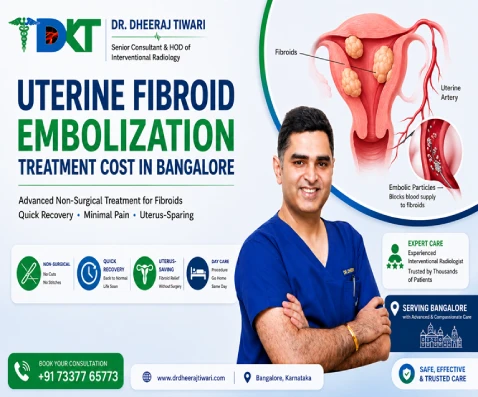
Uterine Fibroid Embolization Treatment Cost
Uterine Fibroid Embolization (UFE) is a minimally invasive, image-guided treatment used to shrink uterine fibroids without removing the uterus. It works by blocking the blood supply to fibroids, causing them to gradually shrink and reducing symptoms such as heavy menstrual bleeding, pelvic pain, pressure in the abdomen, and frequent urination. The Uterine Fibroid Embolization Treatment Cost, also commonly searched as UFE Cost and Fibroid Embolization Cost, depends on multiple factors such as hospital type, doctor expertise, diagnostic tests, fibroid size, and overall patient condition.
This procedure is performed by interventional radiologists using a catheter inserted through a small incision in the groin or wrist. Tiny embolic particles are then released into the uterine arteries to block blood flow to the fibroids. Over time, the fibroids shrink naturally, and symptoms improve significantly. Compared to traditional surgery like hysterectomy or myomectomy, UFE offers a faster recovery, less pain, and no large surgical incision.
The growing demand for Uterine Fibroid Embolization Treatment Cost (UFE Treatment Cost) is due to its uterus-preserving nature and high success rate. It is especially suitable for women who want to avoid open surgery or those who are not ideal candidates for major surgical procedures.
In India, especially in metro cities like Bangalore, the Uterine Fibroid Embolization Treatment Cost typically ranges from ₹1,50,000 to ₹3,50,000. The price may increase depending on the complexity of fibroids, hospital facilities, room category, and additional diagnostic requirements such as MRI or ultrasound scans.
UFE is considered one of the most advanced alternatives to surgery for fibroid treatment. It is widely recommended for women suffering from heavy bleeding, severe menstrual cramps, anemia due to blood loss, or pressure symptoms caused by large fibroids. Many patients prefer this treatment because it avoids major surgery and allows them to return to normal life within a few days.
Primary Keyword: Uterine Fibroid Embolization Treatment Cost
Secondary Keywords: UFE Cost, Fibroid Embolization Cost, Non-Surgical Fibroid Treatment
What is Uterine Fibroid Embolization (UFE)?
Uterine Fibroid Embolization (UFE) is a specialized interventional radiology procedure that treats fibroids by cutting off their blood supply. Unlike surgical removal, the uterus remains intact while only the fibroids are targeted.
During the procedure, a thin catheter is guided through a blood vessel, usually from the groin or wrist, into the uterine arteries. Small embolic particles are then injected to block blood flow to the fibroids. Without blood supply, fibroids shrink over time and symptoms gradually reduce.
The advantage of UFE is that it does not require large incisions, stitches, or long hospital stays. Most patients recover quickly and experience significant improvement in symptoms. This is why searches for Uterine Fibroid Embolization Treatment Cost (UFE Cost) have increased significantly in recent years.
Uterine Fibroid Embolization Treatment Cost Factors
The Uterine Fibroid Embolization Treatment Cost is not fixed and depends on several important medical and non-medical factors:
1. Hospital Type
Multi-specialty hospitals with advanced radiology units may charge higher fees compared to smaller clinics. However, they also provide better infrastructure and post-treatment care.
2. Doctor Expertise
Highly experienced interventional radiologists may have higher consultation charges, but they also ensure better accuracy and safety during the procedure.
3. Fibroid Size and Number
Patients with multiple or large fibroids may require more complex treatment, which can increase the overall UFE Treatment Cost.
4. Diagnostic Tests
Before undergoing UFE, tests like MRI, ultrasound, and blood work are required. These tests contribute to the total treatment cost.
5. Hospital Stay
Most patients stay 1–2 days in the hospital. Room selection (general, private, deluxe) also affects the final bill.
6. Post-Treatment Care
Follow-up visits, medications, and recovery monitoring also influence the total expense.
Benefits of Uterine Fibroid Embolization
UFE offers multiple advantages over traditional surgical procedures:
- Minimally invasive treatment with no large incision
- Preserves the uterus and fertility potential
- Faster recovery compared to surgery
- Less pain and minimal complications
- Effective relief from heavy bleeding and pelvic pressure
- Short hospital stay (usually 24–48 hours)
Because of these benefits, many patients prefer UFE when searching for Uterine Fibroid Embolization Treatment Cost (UFE Cost) instead of opting for hysterectomy.
Who is Eligible for UFE Treatment?
UFE is recommended for women who:
- Have symptomatic uterine fibroids
- Experience heavy or prolonged menstrual bleeding
- Suffer from pelvic pain or pressure
- Want to avoid surgical removal of the uterus
- Are not suitable candidates for traditional surgery
A detailed medical evaluation is necessary before confirming eligibility.
Recovery After UFE Procedure
Recovery after UFE is generally smooth and faster compared to surgical methods:
- Mild abdominal cramping for 1–3 days
- Fatigue for a few days
- Return to normal activities within 5–7 days
- Full fibroid shrinkage may take 3–6 months
Most patients report significant symptom relief within a few weeks after treatment.
Risks and Side Effects
Although UFE is safe, some mild side effects may occur:
- Temporary pelvic pain or cramping
- Low-grade fever
- Fatigue or nausea
- Rare risk of infection
Serious complications are uncommon when performed by experienced specialists.
FAQ – Uterine Fibroid Embolization Treatment Cost
1. What is the average UFE cost in India?
The Uterine Fibroid Embolization Treatment Cost (UFE Cost) generally ranges from ₹1,50,000 to ₹3,50,000 depending on hospital and case complexity.
2. Is UFE better than surgery?
Yes, UFE is less invasive, preserves the uterus, and has a faster recovery compared to traditional surgery.
3. How long does the procedure take?
The procedure usually takes 60–90 minutes.
4. Is hospitalization required?
Yes, most patients require a short stay of 1–2 days.
5. Can fibroids return after UFE?
Treated fibroids shrink permanently, but new fibroids may develop in some cases.